Ever stood in your backyard and thought, “There’s just not enough room here”?
Maybe you’ve got a narrow strip of grass, a patchy lawn, or a space that feels more like a walkway than somewhere you’d actually want to spend time. You’ve looked at it from every angle, tried different furniture arrangements, maybe even considered moving.
But here’s the thing: you might not need more space. You just need to use the space you’ve got better.
That’s where a well-designed deck comes in. Not just any deck, one that’s planned with intention, built with the right materials, and designed to make your yard feel twice as big as it actually is.
We’ve been building wood decks for homeowners across the Greater Vancouver and Fraser Valley areas for over 15 years. We’ve seen tiny urban backyards transform into outdoor rooms that feel expansive. We’ve seen sloping, unusable spaces become the favourite spot in the house. And we’ve learned exactly what works.
Here’s how a properly designed deck can make your backyard feel bigger and why it’s one of the smartest investments you can make for your home.
The Illusion of Space: How Design Tricks Your Eye
Here’s something most people don’t realise: space is as much about perception as it is about square footage.
You can have a tiny backyard that feels open and airy. You can have a large yard that feels cramped and closed in. The difference isn’t the size, it’s how you use it.
A well-designed deck uses visual tricks to make your yard feel larger than it really is. It draws the eye in certain directions. It creates the illusion of depth. It makes the boundaries of your space feel further away than they actually are.
Think about it this way. If you’ve ever walked into a small room with floor-to-ceiling mirrors and thought, “Wow, this is bigger than I expected,” you’ve experienced this firsthand. The same principles apply outdoors. It’s not magic, it’s design.
The Kinsley Landscape Approach
Before we get into the specific strategies, let’s talk about who we are and what we do.
Kinsley Landscape Ltd. is a full-service landscape construction and maintenance company based in Maple Ridge, BC. We’ve been in the industry for over 15 years, and we’ve built a reputation for quality craftsmanship across the Greater Vancouver and Fraser Valley areas.
Kinsley Landscape construction side focuses on retaining walls, paving stones, gardens, water features, landscape lighting, cedar fences Maple Ridge, and of course wood structures including decks. We handle both residential and commercial projects, but the bulk of our work – about 80 to 90 percent, is residential construction.
We’re a family-run company, and we take pride in treating every project like it’s our own home. From the initial design consultation to the final inspection, we’re hands-on, communicative, and committed to getting it right.
Strategy 1: Multi-Level Decks Create Visual Depth
This is one of the most effective ways to make a small yard feel bigger – and it’s surprisingly underused.
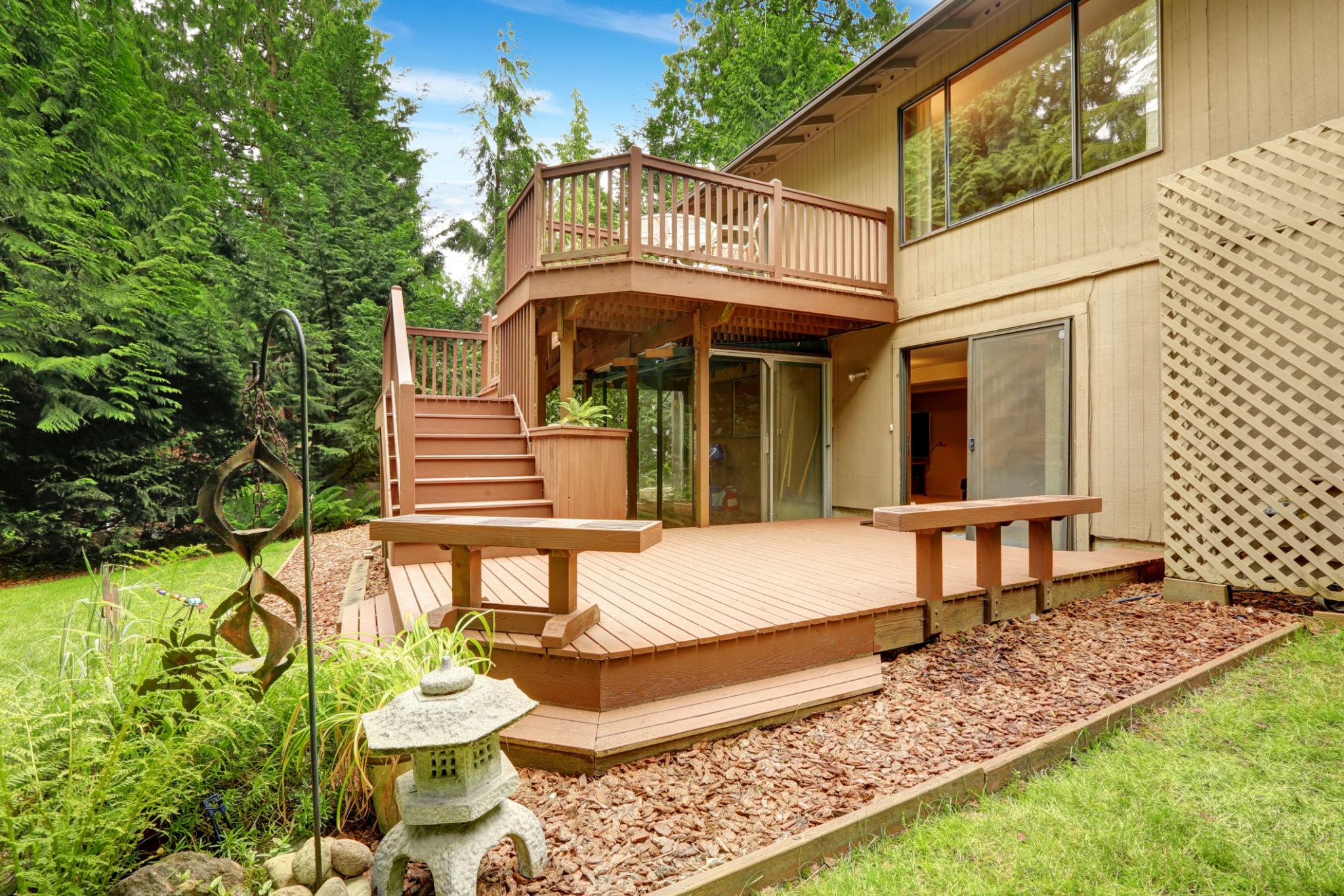
Instead of a single flat surface, a multi-level deck breaks your outdoor space into distinct zones. A lower level for dining. A slightly raised area for lounging. Maybe a small step up to a fire pit area.
Here’s why this works: when you break a space into levels, your eye has to travel across multiple planes. It doesn’t just see one flat rectangle; it sees depth, dimension, and variety. That makes the overall space feel larger and more interesting.
Think of it like this. A single-level deck in a small yard can feel like a platform; functional, but visually flat. A two-level deck with a step or two between them feels like a destination. It invites you to explore, to move from one zone to another. And that sense of exploration makes the space feel bigger than it really is.
Plus, multi-level designs are practical. They help you work with sloped yards instead of fighting against them. Instead of spending a fortune on retaining walls and grading, you can build a deck that follows the natural contour of your land.
Strategy 2: Diagonal and Picture-Frame Patterns Add Width
Here’s a trick that professional deck builders use all the time and it costs nothing extra.
The way you lay your deck boards changes how the space feels.
Diagonal patterns where the boards run at a 45-degree angle to the house, create a sense of movement and flow. Your eye follows the lines outward, which makes the deck feel wider and more expansive.
Picture-frame patterns where the outer boards run parallel to the edges and the inner boards run in a different direction, create a sense of enclosure without feeling closed in. It’s like framing a painting. The frame defines the space, but the picture inside feels bigger because of it.
Straight patterns where the boards run parallel to the house can work too, but they tend to make the space feel narrower. If you’re working with a long, narrow yard, this can actually make the problem worse.
The takeaway? Talk to your deck builder about board orientation. It’s a small detail that makes a big difference.
Strategy 3: Light Colours Open Up the Space
This is basic design psychology, but it’s amazing how many people overlook it.
Dark colours absorb light. They make spaces feel smaller, cosier, more enclosed. That’s great for a bedroom or a study. It’s not great for a small backyard where you want to feel open and airy.
Light colours reflect light. They bounce light around the space, which makes it feel brighter and more expansive.
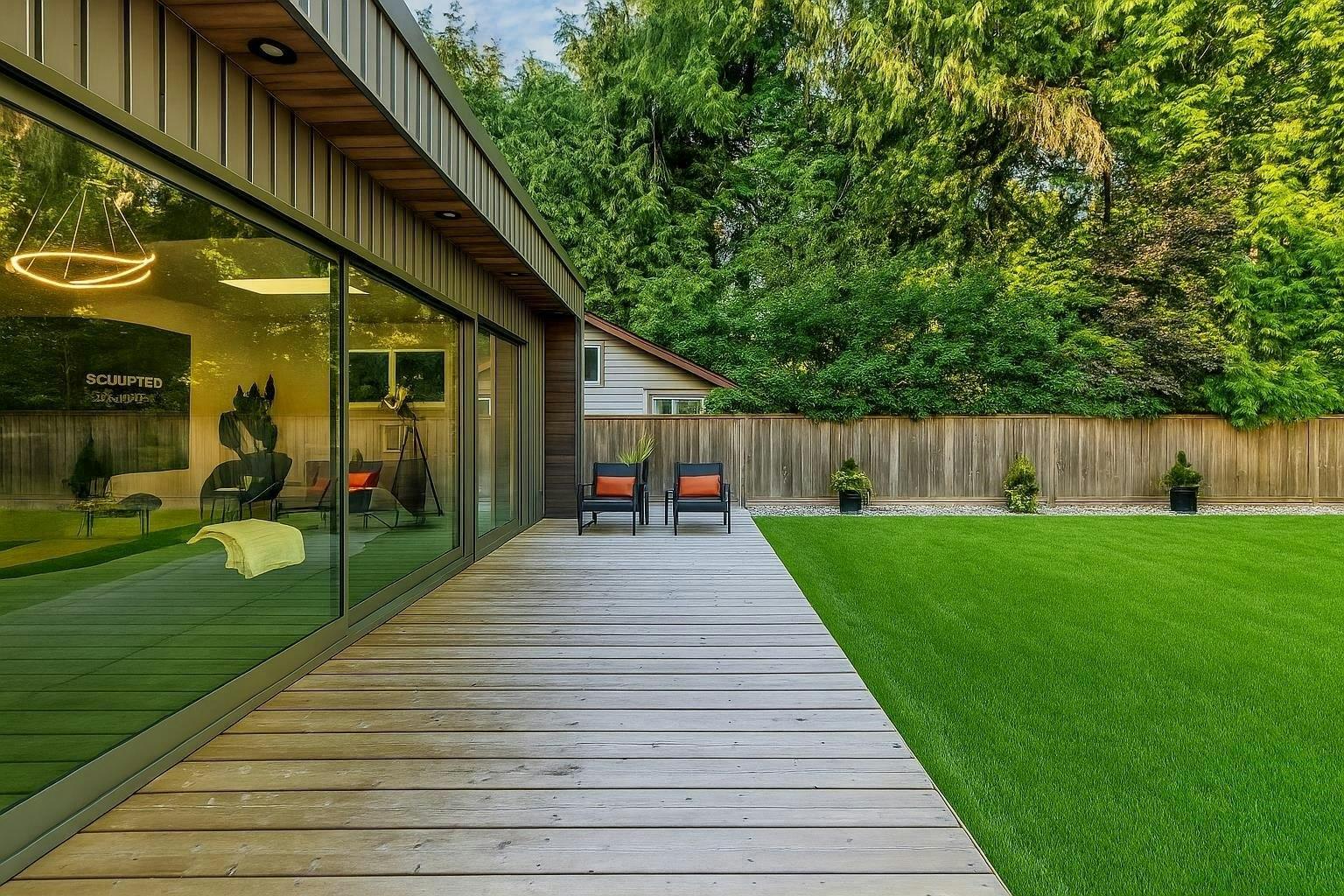
For a deck that makes your yard feel bigger, choose lighter materials. Pale woods, soft greys, breezy beige tones. If you’re going with composite decking, look for lighter colour options.
Here’s the bonus: light-coloured decks also stay cooler in summer. Dark materials absorb heat and can get uncomfortably hot underfoot. Lighter materials reflect heat, which means you can actually walk on your deck barefoot on a sunny afternoon.
Strategy 4: Built-In Features Eliminate Clutter
Here’s something that makes a huge difference but rarely gets mentioned.
Clutter makes spaces feel smaller. It’s that simple.
When you’ve got standalone furniture, planters, a barbecue, and maybe a fire pit all competing for floor space, your deck feels crowded. Every item takes up room, creates visual noise, and makes the space feel cramped.
Built-in features solve this problem.
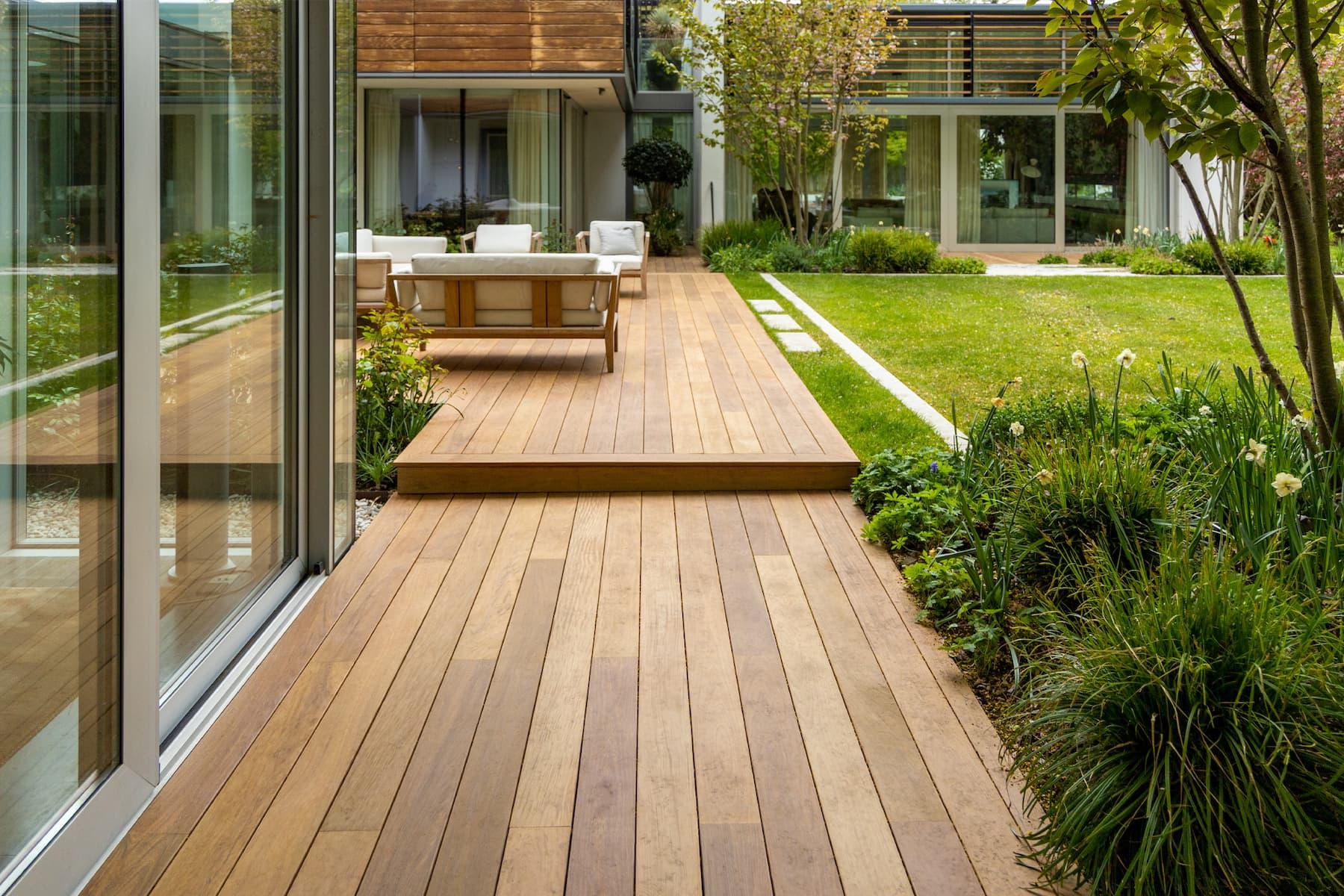
- Built-in seating along the edges of your deck uses space that would otherwise be wasted. It eliminates the need for bulky standalone chairs and creates a clean, streamlined look.
- Built-in planters add greenery without taking up floor space. They can also double as privacy screens or railings.
- Built-in lighting, integrated into the deck itself, eliminates the need for standing lamps or string lights that take up space and create visual clutter.
When you build features into the deck itself, you’re using every inch of space efficiently. The deck becomes the furniture. And when the furniture is built in, the space feels more open and intentional.
Strategy 5: Extend Your Living Space Outward
Here’s a mindset shift that changes everything.
Most people think of a deck as an “outdoor addition”, something separate from the house. But the best decks don’t feel separate. They feel like an extension of the house itself.
When you blur the line between indoors and outdoors, your backyard feels bigger because it becomes part of your living space.
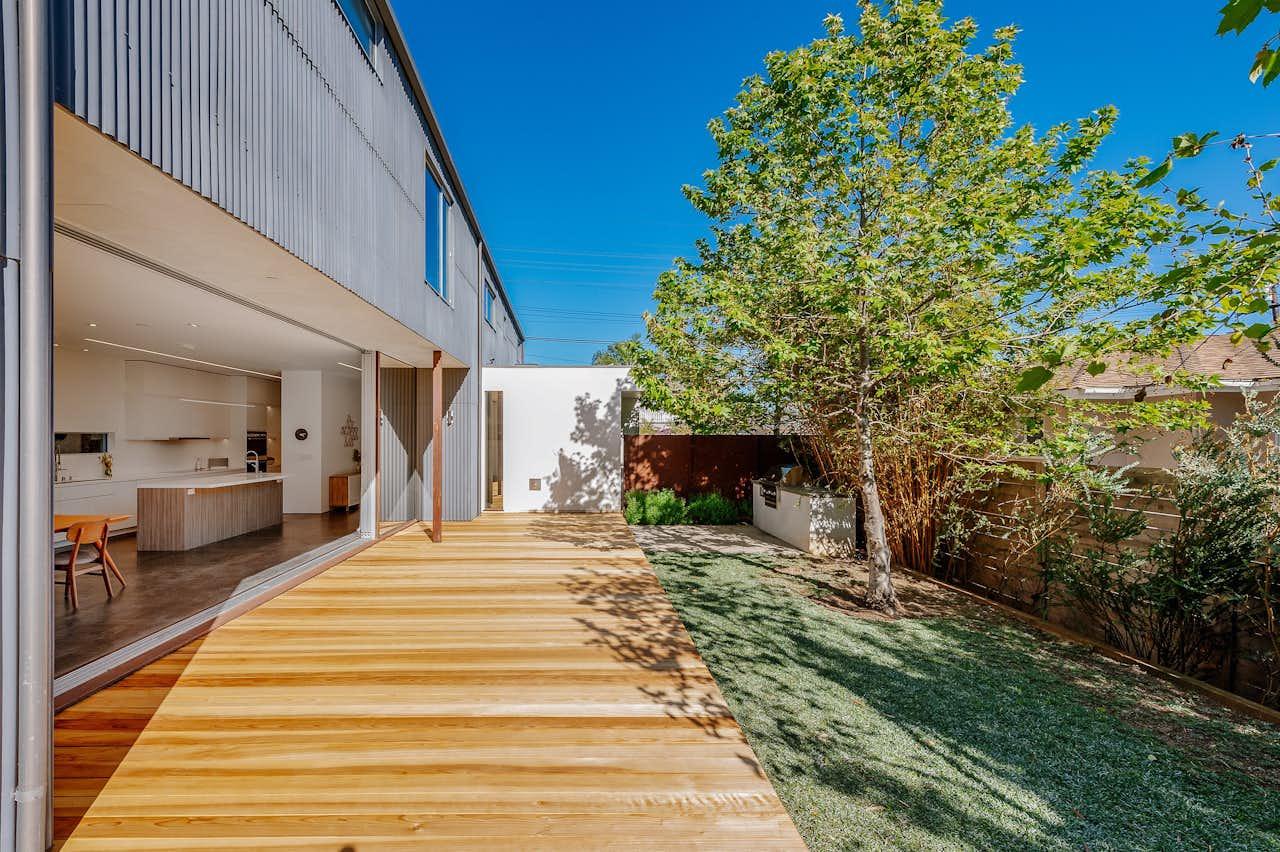
Install large glass sliding doors that open onto the deck. When they’re open, the boundary between inside and outside disappears. Your living room flows onto the deck, and the deck flows into the yard.
Use the same or similar materials inside and out. If you’ve got hardwood floors inside, consider a wood deck that complements them. If your interior has a certain colour palette, echo it on the deck.
Add an outdoor rug that matches your indoor style. It creates visual continuity and makes the deck feel like another room, not just a wooden platform.
When your deck feels like part of the house, your usable living space effectively expands. And that expansion makes your whole property feel larger.
Strategy 6: Vertical Elements Draw the Eye Up
Here’s something most people don’t think about.
We spend so much time looking at the horizontal space; the ground, the deck surface, the lawn, that we forget about the vertical dimension.
When you draw the eye upward, the space feels taller and more open.
Vertical gardens along one or two walls add greenery without taking up floor space. Choose plants with varying heights, textures, and colours to add visual interest.
Tall trellises or pergolas create a sense of enclosure without closing the space in. They define the area while still allowing light and air to flow through.
Strategic lighting – uplights directed at trees or the house – draws the eye upward and makes the space feel larger at night.
When you use vertical space well, you’re effectively increasing the perceived size of your yard without adding a single square foot.
Strategy 7: The Right Railing Makes a Difference
This is one of those details that seems minor but matters a lot.
Thick, solid railings can make a deck feel closed in and cramped. They create a visual barrier that stops your eye from travelling beyond the deck.
Slim, minimalist railings, especially glass or cable railings, maintain sightlines and make the space feel more open.
If privacy is a concern, there are ways to achieve it without sacrificing the feeling of space. Partial privacy screens, strategically placed planters, or frosted glass panels can provide seclusion while still letting light through.
The goal is balance. You want to define the space without closing it in. You want privacy without feeling boxed in. The right railing choice achieves both.
What This Means for Your Home
Every yard is different. Every homeowner has different needs, different budgets, and different visions for their outdoor space.
But the principles are the same.
A well-designed deck isn’t just a wooden platform. It’s a carefully planned extension of your home that uses visual tricks, smart materials, and thoughtful details to make your yard feel bigger than it really is.
At Kinsley Landscape, we’ve been building wood decks across Maple Ridge, Greater Vancouver, and the Fraser Valley for over 15 years. We’ve seen what works and what doesn’t. We know how to design for small spaces, sloping yards, and tricky layouts.
We’ll work with you to figure out exactly what you need. We’ll handle the design, the permits, the materials, and the construction. And we’ll stand behind our work with the kind of craftsmanship that comes from years of experience.
Because the best deck isn’t the one that just looks good, it’s the one that makes your whole property feel bigger, better, and more like home.
Frequently Asked Questions
Will a deck really make my small backyard feel bigger?
Absolutely, if it’s designed right. The key is using visual tricks like multi-level designs, diagonal board patterns, light colours, and built-in features that eliminate clutter. A poorly designed deck can make a space feel cramped. A well-designed one can make it feel twice as big.
What’s the best decking material for a small yard?
It depends on your priorities. Natural wood like cedar or pressure-treated pine looks beautiful and is cost-effective, but requires regular maintenance. Composite decking costs more upfront but needs almost no upkeep and comes in a wide range of colours, including light shades that help small spaces feel larger.
How long does it take to build a deck?
Most residential decks take one to three weeks once materials are on site. Simple designs can be finished within a week. More complex projects like multi-level decks on sloping blocks can take three to five weeks.
Do I need a permit for a deck in BC?
Usually yes, especially if the deck is more than 600mm off the ground, attached to your house, or over a certain size. Your deck builder should handle the permit process for you, at Kinsley Landscape, we identify permit requirements during the design stage.
How do I maintain a wood deck?
Regular maintenance includes cleaning to prevent mould and algae, oiling or sealing at least once a year, and checking for loose boards or popped nails. With proper care, a wood deck can easily last 20 to 30 years.
The Bottom Line
Look, a small backyard doesn’t have to feel small.
With the right design, the right materials, and the right builder, you can transform even the most cramped outdoor space into something that feels open, inviting, and surprisingly spacious.
It’s not about square footage. It’s about how you use it.
Multi-level designs create depth. Diagonal patterns decking add width. Light colours open things up. Built-in features eliminate clutter. Vertical elements draw the eye upward. And the right railing keeps the space feeling open without sacrificing privacy.
These aren’t gimmicks, they’re proven design principles that professional deck builders have been using for years.
If you’re in Maple Ridge, Greater Vancouver, or the Fraser Valley, and you’re ready to make your backyard feel bigger than it actually is, Kinsley Landscape would love to help.