Here’s a quick test you can do in two minutes. Next time you’re out in the backyard, walk along your fence and give each post a firm push. Then poke the bottom of a few boards with a screwdriver. If anything wobbles, leans or feels soft, keep reading.
Most of us don’t check. A fence is easy to ignore because it just stands there, doing its job, until it doesn’t. It also wears out slowly, so there’s never one big moment that says “now’s the time.” People tell themselves it’ll last one more winter, and one more winter turns into three.
The trouble is that Maple Ridge’s wet weather keeps working on the wood the whole time, especially at the base of the posts where you can’t see. By the time the fence falls over, it’s usually after a windstorm, and it’s usually at the worst moment.
If you’re wondering whether yours has reached that point, or you’re already looking into cedar fence installation Maple Ridge, here are seven signs to watch for.
1. Do the posts lean or wobble?
This is the biggest one. Posts hold the whole fence up, and when they go, everything else follows.
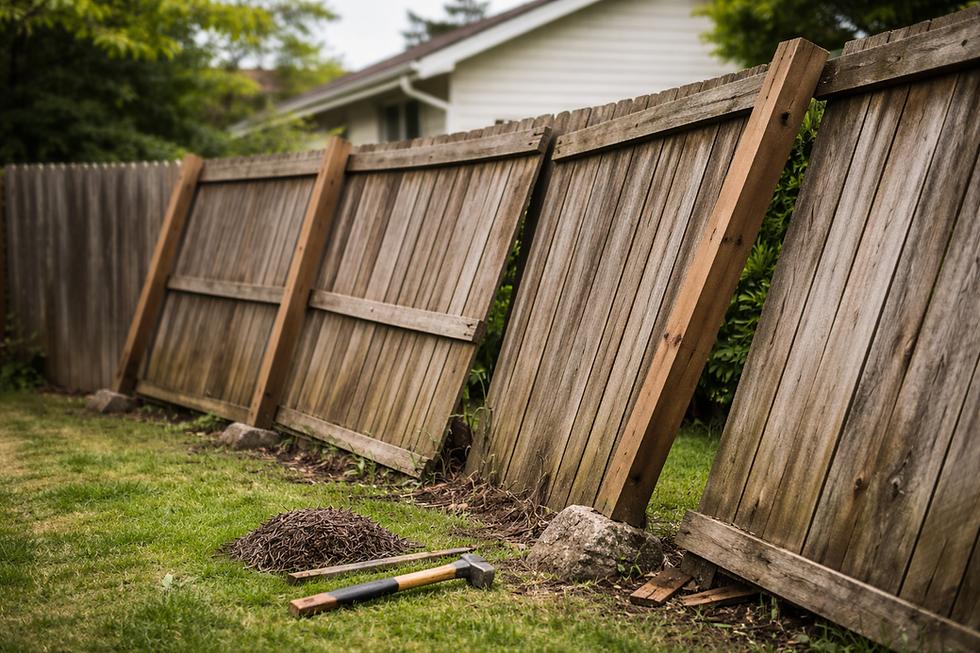
Walk along the fence and push on each post. A solid post barely moves. A bad one rocks, shifts or leans over. Maple Ridge’s wet ground keeps the base of a post damp for much of the year, so the wood slowly rots right where it meets the soil. You can’t always see it, because the top looks fine while the bottom is mush.
One leaning post can often be fixed. But if several posts lean or wobble, the problem is usually the whole fence, and patching it won’t last.
2. Is the wood soft, spongy or crumbling?
Grab a screwdriver and poke the posts, rails and the bottom of the boards. If the tip sinks in easily, or pieces flake and crumble off, the wood is rotting.
A few soft boards near the ground are normal on an older fence and easy to swap out. The warning sign is when rot is spread across lots of boards and rails, or when it’s in the posts. At that point you’re not fixing a fence anymore. You’re slowing down its decline.
One thing that is not a problem is grey colour. Cedar turns silver-grey in the sun and rain, and that’s natural. Soft wood is what matters.
3. Are there gaps, missing boards or warped panels?
A fence is supposed to give you privacy, keep pets and kids in and keep unwanted visitors out. Gaps and missing boards undo all of that.
Over the years, wood dries, shrinks and twists. Boards pull away from the rails, nails work loose and panels bow outward. A few gaps can be repaired. But when you can see through the fence in many places, or the panels are bending, the structure underneath is usually tired.
If you have a pool, a young child or a dog that likes to escape, this one is more than cosmetic. Check the District of Maple Ridge’s bylaws for fence rules around pools.
4. Does the gate sag, drag or refuse to latch?
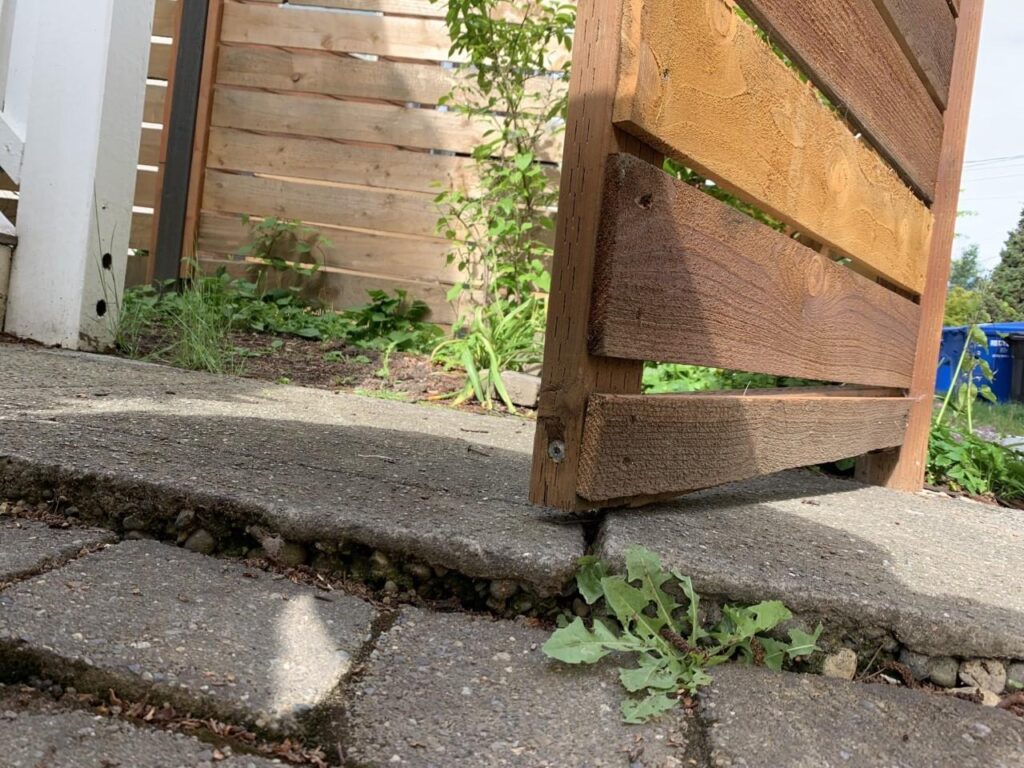
Gates take the most abuse on any fence. They swing open and shut every day, and all that weight pulls on the hinges and the post.
A gate that drags on the ground, won’t close properly or needs a shove to latch usually means the gate post has started to lean. Sometimes it’s just a loose hinge, which is a quick fix. But if the post is rotting, adjusting the gate only works for a short time.
Rusty hinges and latches are another hint that the whole fence has been getting wet for a long time.
5. Do you repair it over and over again?
This one relates to money and patience.
Putting up a repair after each storm or spring is costly. A board here, a post there, fresh a new latch, fresh stain. It appears that any one repair is a trivial fix. Combined, they can end up being nearly as expensive as a new fence, and you will still have a worn out fence.
One basic guideline: If over, say, 33% of the fence has to be replaced, or if the repairs are likely to cost something around half as much as replacing the fence, it’s generally a better idea to replace it. The new posts and rails also reset the clock on the length of time the fence will last.
6. Do moss, mildew and insects reappear?
It is not a massive issue if there was a little bit of green on a shaded fence. If moss, mildew or dark patches keep growing back after washing frequently, it means that the wood is probably still wet.
Rots, fungus and wood-boring insects love constantly damp wood. If you notice small holes, sawdust-like mounds at the base or boards that sound hollow, there could be insects. After it begins, it gets worse and worse and surface cleaning doesn’t correct the inside problem.
This can be caused by poor drainage, soil against the boards or sprinklers hitting the fence. It is a great opportunity to correct those causes when putting in a new fence, so they will not return.
7. Is it unsafe, or is it hurting your property?
Look at the fence like a stranger would.
Are there nails sticking out, sharp splinters or sections that look ready to fall? A leaning panel can fall onto a neighbour’s yard, a car or a person during a windstorm, and that can turn into a liability problem. A damaged fence also drags down your curb appeal. If you plan to sell, buyers notice a tired fence right away, and it can make the whole yard look neglected.
On the other hand, a fresh, well-built fence makes a property feel finished and cared for.
What should you do before you replace it?
Start by walking the whole fence line and taking photos. Mark each problem spot, count how many posts are bad and note whether the fence is on your boundary.
If you share the fence with a neighbour, talk to them first. It’s much easier to plan a replacement together, and it avoids surprises about who pays. Also check the District of Maple Ridge’s rules for fence height and placement before building, since they set limits that can differ for front and back yards.
Then get a quote. A good installer will look at your soil, drainage and the condition of what’s there, then explain what they’d change.
What should a new fence include?
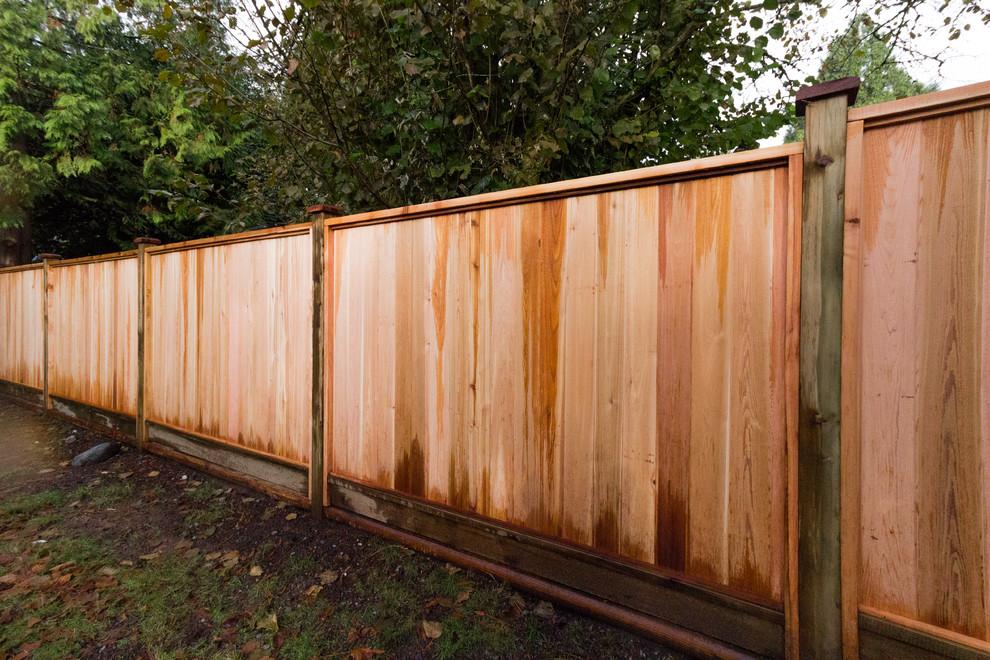
Since you’re starting fresh, build it to last in our weather. That means pressure-treated posts, properly mixed concrete around each post, caps on top, boards that sit a little above the soil and good drainage along the base. A fence built that way can last many years longer than one that’s rushed.
When you’re comparing quotes for cedar fence installation in Maple Ridge, ask how the posts are set and what kind of concrete is used. It’s the part you can’t see once the fence is up, and it makes the biggest difference.
Bottom line
So, how many signs did you spot?
If you found one or two, like a few soft boards or a loose latch, a repair will probably do the job. If you counted three or more, or the posts themselves are leaning or rotting, it’s time to start planning a replacement, because patching a weak frame rarely lasts. And if anything looks unsafe, like a panel that could fall or sharp nails sticking out, don’t wait for spring.
The good news is that a replacement is a chance to fix what went wrong the first time. Stronger posts, good drainage and a little space between the boards and the soil can add years to the next fence.