Got a shady, tree-filled yard and not a clue where to start?
This is the stuff we tell clients all the time in Maple Ridge. We’ll cover how to pick plants that don’t die, work around big roots, handle all that rain, and build a garden that mostly looks after itself.
So, You’ve Got a Forested Lot. Now What?
First off, congrats. A shady, tree-filled property in Maple Ridge is a pretty sweet thing. You’ve got privacy, dappled light, that calm tucked-away feeling. It’s beautiful.
But yeah, trying to plant something under all those branches? Different story.
You go to dig. Shovel hits a root two inches down. Another root. Then another. It’s like a web of thick, woody obstacles just under the soil. The trees; cedars, firs, big leaf maples, they soak up every bit of water and food before your poor little plant even has a chance.
On top of that, the dirt here is acidic from years of fallen needles and leaves. The thick canopy blocks a lot of rain from even touching the ground. Some spots stay damp and mucky half the year. Other spots end up bone dry all summer long. It’s a mix that’ll drive you nuts if you don’t know how to work with it.
We’ve been landscaping in Maple Ridge for over fifteen years, and we’ve learned one big thing. Don’t fight the trees. You won’t win. They were here first and they’re way more stubborn than you.
But here’s the flip side. If you work with the forest, you end up with a garden that’s quiet, cool, and mostly looks after itself. Plus, those big old trees are something you just can’t buy. A fifty-year-old cedar? Nobody’s installing one of those over a weekend. You already have them. That’s gold.
First Up, Really Look at Your Yard
I know, this sounds like doing nothing. But trust me, skipping this step is how people blow money on plants that die before the season’s over.
Watch the sun.
Pick a day you’re home. Snap a picture of your yard at 8 in the morning, again at noon, and again around 4. Where’s the sun hitting? Where’s it dark all day? You might think the whole space is a cave, but then you spot a corner that gets a few hours of decent afternoon light. That changes what you can plant.
And shade’s not all the same. There’s dappled light flickering under an open tree, which a lot of plants actually love. Then there’s the heavy, dark shade under a thick cedar. That’s tricky. Not much grows there, and that’s okay. Put a bench or a birdbath there instead.
Check your dirt.
Just grab a handful. Squeeze it. If it falls apart, you’ve got sandy soil. If it stays in a tight clump, it’s more clay. Most forest soil here is a bit acidic because of all those rotting needles and leaves. That’s actually perfect for a bunch of woodland plants, like rhododendrons and ferns.
Find the soggy and dry bits.
Walk around during a good rain. See where puddles form. That’s a spot for a rain garden or a dry creek bed. Then walk around in August. The ground under that big cedar might be dust. Don’t put moisture-loving stuff there. It’ll just crisp up.
Know your trees.
Cedars and firs keep their needles all year, so it’s always shady. Maples and alders drop leaves in fall, so you get more light in winter and early spring. Big leaf maples? They have crazy shallow roots that spread everywhere. You need to know that before you try planting anything underneath them.
Don’t Hurt Your Trees While You Garden
Those big trees are worth more than anything you could buy. Keep them healthy, and they’ll take care of you.
Don’t pile dirt against the trunk. I’ve seen folks build raised beds right around a tree so they can plant deeper. Looks okay for a bit, but then the bark starts to rot and the tree slowly dies. Trees need to breathe at the base. Bury it, and you’re choking them.
Don’t hack through big roots. If you hit a root thicker than your arm while digging, go around it. Cutting it opens the tree up to disease and makes it wobbly in a storm. You really don’t want a big cedar falling toward your roof.
Plant smaller plants. Instead of those big potted things that need a massive hole, get the little four-inch or one-gallon plants. They need a tiny hole, so you damage fewer roots. Plus, they settle in faster and often catch up to the bigger plants in a year or two. Less shock, less work.
Leave the leaves. Those fallen leaves and needles? That’s not a mess. That’s free food for your soil. It’s nature’s mulch. Blow them off paths and patios, sure. But in your beds, let them lie. The worms and microbes break it all down into lovely rich stuff.
Plants That Won’t Die on You
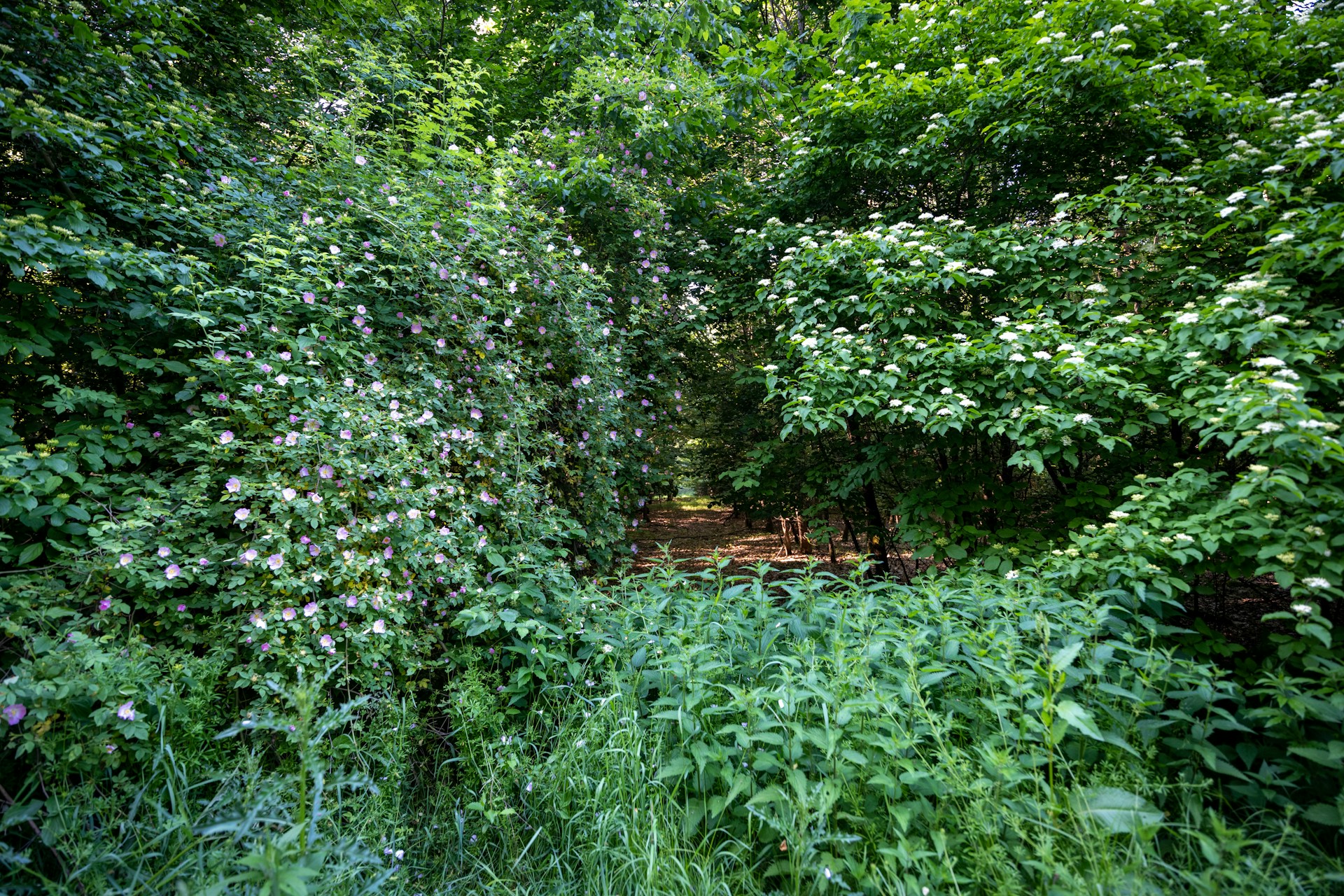
Alright, the fun part. But go easy at the nursery. It’s really tempting to grab whatever’s flowering.
Best tip we can give: look at what grows wild in the forests around here, and just plant more of that. Native stuff already gets our soil, our rain, our light. You don’t need to baby it. You don’t need to baby it. We’ve rounded up the best plants for Maple Ridge landscaping in 2026 that handle both the soggy winters and the dry summers without throwing a fit.
Groundcovers that earn their keep. Bare dirt under trees? That’s a weed magnet. Cover it with something. Sweet woodruff makes a soft green carpet and smells nice. Wild ginger has shiny heart-shaped leaves and handles deep shade. Kinnikinnick is a native evergreen that stays low and doesn’t mind dry shade under conifers. Once these spread, they smother weeds for you. Less weeding, more relaxing.
Ferns. Lots of ferns. You can’t go wrong here. Western sword ferns are tough as nails. Native, evergreen, and they instantly give that lush forest feel. Lady ferns die back in winter but pop up again every spring. Plant a bunch together and you’ve got that jungly, layered look right away.
Shrubs that do the heavy lifting. Rhododendrons love acidic soil (which you’ve got). Big blooms in spring, and they look pretty good the rest of the year. Oregon grape is another native workhorse. Yellow flowers in early spring, berries for the birds in summer, and it handles dry shade like a champ. Salal, which you’ve seen on every BC trail, is basically zero-maintenance. It just quietly fills space.
A few flowers to tuck in. Bleeding hearts are delicate and bloom in spring. Hostas give you big bold leaves in all sorts of greens and blues. Coral bells come in bright lime or deep burgundy and light up dark corners. They’re not native, but they behave and thrive here.
Hardscaping: The Real Trick to a Low-Maintenance Life
Here’s a secret. Every bit of path, patio, or gravel area you put in is a bit you never have to weed, water, or mulch again. Hardscaping is what actually makes a garden easy.
Put in a winding path
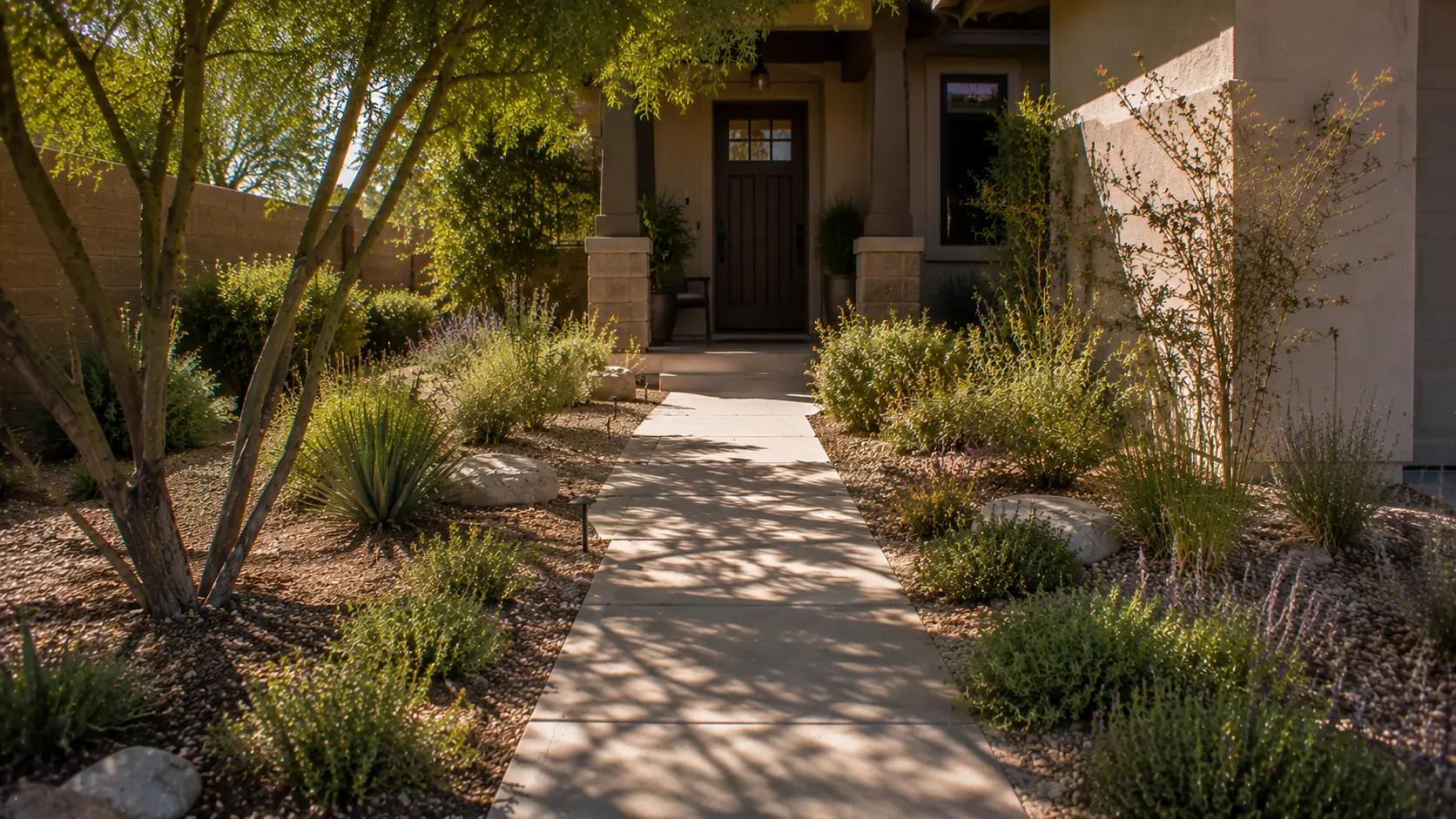
A gravel path that curves through the trees makes everything look planned. It says “this is a garden” instead of “this is some dirt with trees.” Curves look more natural than straight lines in a forest. Let the path dodge the big roots.
Build a little spot to sit
If there’s nowhere to park yourself, you won’t use the yard. A small flagstone patio with a couple of chairs is plenty. Add a few low-voltage lights and you’ll hang out there in the evenings too. Under the trees at dusk, with some soft lights glowing? It’s magic.
Walls that look like they belong
Lots of Maple Ridge places have slopes. A retaining wall turns a useless slope into a flat, usable spot. Natural stone walls blend in way better than concrete blocks. We do a ton of these at Kinsley Landscape. Walls, patios, paving stones, water features, lights, when you pull it all together the right way, it just feels right. The same goes for fencing. A good cedar fence that fits your budget doesn’t have to look cheap. There’s designs that actually add to the yard instead of just marking a line.
Handling All That Rain (And Then No Rain)
From fall to spring, it pours. Then summer hits and it’s dry for weeks. Your garden has to deal with both.
Dry creek beds and rain gardens
A dry creek bed is just a shallow, curvy trench filled with rocks. When it’s wet, water flows through it rather than pooling on your lawn. When it’s dry, it still looks nice, like a stream that’s just resting. A rain garden is a planted low spot that catches water and slowly soaks it in. Both of these are way prettier than a muddy bog.
Mulch is your buddy
A thick layer of wood chips three or four inches holds moisture in summer, blocks weeds, and keeps the soil from getting too hot or cold. Plus it slowly rots into good rich soil. Just keep it away from tree trunks so you don’t cause rot.
Watering under the trees
Remember, a thick canopy blocks a lot of rain. The dirt under big trees can be dust dry even when the rest of the yard is fine. A simple drip irrigation line through the beds puts water right at the roots. Put it on a timer and you don’t even have to think about it.
Putting It All Together
So where do you start? Here’s a rough plan.
Begin close to the house. That’s where you’ll hang out most. Patio, seating, nice lighting. Then a path leads out into the wilder parts. Near the house, it’s a bit more tidy. Further out, it gets more natural.
Layer like the forest does. Big trees on top, smaller ones in the middle, ferns and groundcovers down low. Nature’s been doing this forever. Just copy it.
Group plants that need the same amount of water. Put the thirsty ones in the damp corner. The tough drought-tolerant ones go under the dry cedars. Mix them up and you’ll drive yourself nuts trying to keep everyone happy.
Leave some empty spots. Not every inch needs a plant. A bench under a tree. A little clearing with just mulch. A mossy boulder. Open space gives your eyes a break and makes the planted areas feel more special.
Common Mistakes That Most of Us Make
- Trying to grow a lawn under trees. Grass needs sun. Trees give shade. You’ll lose that battle every time.
- Buying plants just because they’re pretty. If the tag says full sun and your yard’s a cave, it’s gonna die. Read the tag.
- Digging right up against tree trunks. Those surface roots are how the tree eats. Hurt them and the whole tree struggles.
- Forgetting about summer. Plants that look great in rainy April can be fried by August if you don’t plan for dry weather.
- Doing too much at once. Pick one corner, make it nice, then tackle the next bit. Gardens are built slowly.
Quick Questions I Hear a Lot
Can I grow vegetables in the shade?
Full sun veggies like tomatoes are tough. But leafy stuff lettuce, kale, spinach they can handle some shade. Find the brightest clearing and maybe do raised beds.
Keep it! Moss is soft, green, and zero work. In a shady yard, a moss garden can look amazing. Way better than fighting to grow grass.
Do I need permission to cut down a tree in Maple Ridge?
Probably. Maple Ridge has a Tree Protection Bylaw. Big trees or ones in protected spots need a permit. Check with the city before you cut anything.
Deer are destroying my plants. Help.
Plant stuff they don’t like. Ferns, Oregon grapes, and salal are less tasty to deer. Fences work but can look ugly. Sprays help a bit but wash off in rain.
What’s the one thing that makes a big difference right away?
A path. Seriously. A curvy gravel path turns messy woods into a garden. It’s the backbone you build everything else off.
Let’s Wrap This Up
A shady, tree-filled yard in Maple Ridge is a real treasure. You’ve got privacy, big beautiful trees, and all the groundwork for a garden that feels like a hidden retreat. You don’t have to turn it into something it’s not.
Work with what nature gave you. Pick plants that love this place. Add a path and a cozy spot to sit. Plan for the wet winters and dry summers. And if you’re feeling a bit lost, grab someone who knows the dirt around here.
We’ve been doing exactly this at Kinsley Landscape for over 15 years. Tricky slopes, big old trees, soggy corners, you name it. If you’re in Maple Ridge or anywhere nearby, just reach out. We’ll come over, walk the yard with you, and we’ll chat about what’ll actually work, no pressure, no sales pitch. Start your project with Kinsley Landscape and make your yard a place you actually want to hang out in