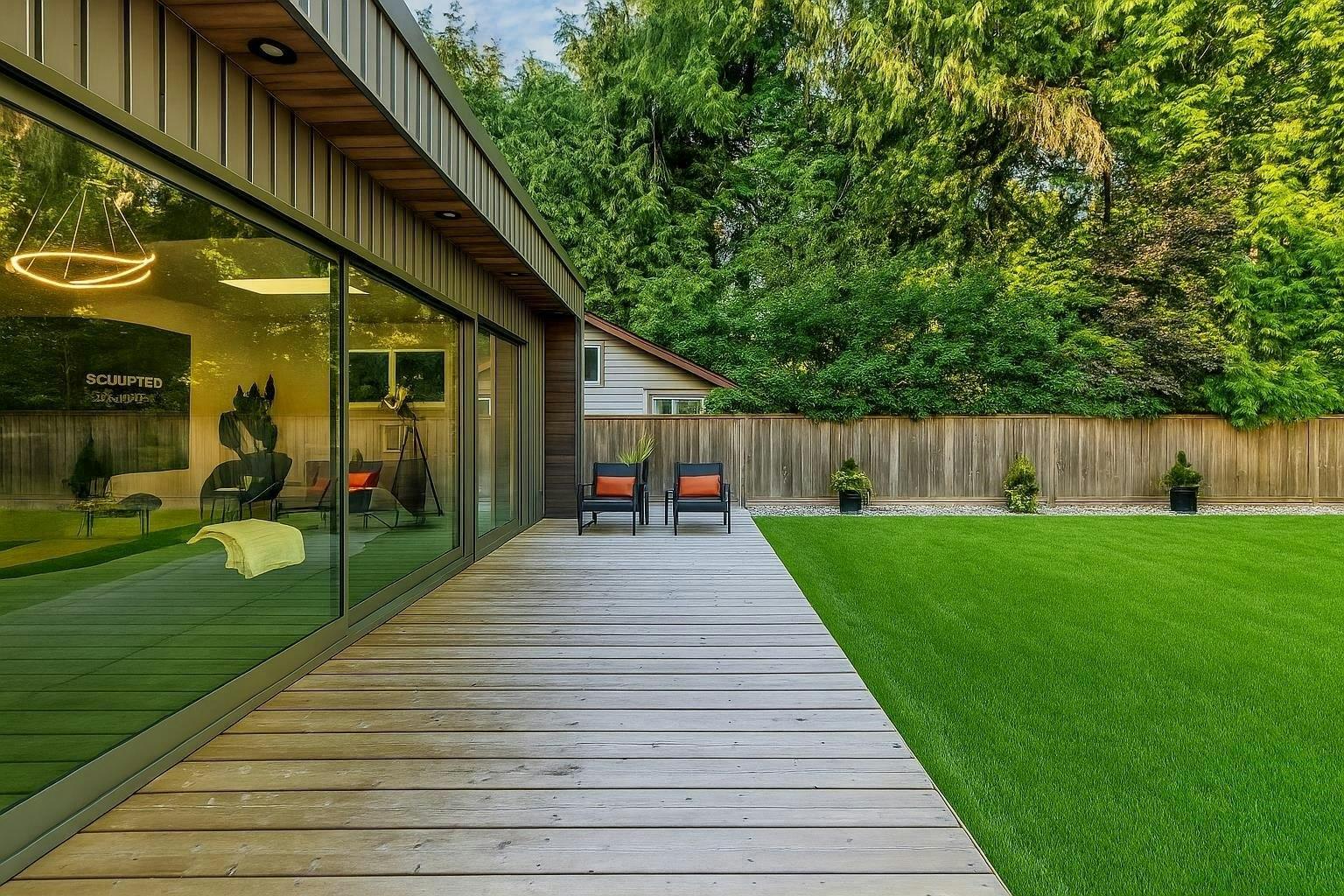
We all have that backyard daydream, don’t we? You can just see it: lazy Sunday mornings with coffee, flipping burgers for friends as the sun sets, a quiet spot to unwind. A wood deck isn’t just lumber nailed together—it’s the stage for your best memories. It turns your yard into another room. Many homeowners pair their deck project with these creative paving stone ideas for driveways to improve the overall appearance of their property.
That dream gets exciting. You hop online, watch a few “how-to” videos, and think, “I’m pretty handy. I’ve built a shed. How different could it be?” It looks straightforward enough.
But let me tell you what those videos usually don’t show: the phone call two years later. The one where a homeowner says, “My deck feels a little springy,” or “The boards are all warping,” or worse, “It’s pulling away from the house.” A deck isn’t a patio table you assemble. It’s a structure that has to stand up to rain, sun, kids jumping, and years of use. What’s under the surface matters more than what’s on top.
That’s the real value of professional wood deck installation services. It’s the difference between a build that looks okay at the start and one that feels rock-solid, season after season.
The Hidden Part That Makes or Breaks Your Deck
The boards you walk on are just the pretty finish. The secret to a great deck is all in the bones—the part you never see once it’s done.

- Getting the Foundation Right: This isn’t just sticking posts in dirt. A pro knows how deep to dig the footings so the winter frost doesn’t push them up. They know how to make sure everything is perfectly level from the very beginning. Get this wrong, and your whole deck can start to sink or tilt. It’s the first place a DIY project can go sideways.
- The Frame is What Holds You Up: That hidden skeleton of joists and beams has to be engineered to carry weight. It needs to be spaced just right, braced properly, and built to let air flow so the wood doesn’t rot from underneath. This isn’t guesswork; it’s knowing the rules (the building code) that keep everyone safe.
- The Tricky Connection to Your House: This is the single most important detail. How the deck attaches to your home has to be absolutely waterproof and incredibly strong. A pro uses special metal flashing and heavy-duty bolts to make sure water can’t sneak in and rot your house’s framing. A bad connection here is dangerous.
What You Actually Get When You Hire a Pro
You’re not just paying for someone to swing a hammer. You’re buying their whole system.
- They Handle the Headache: They deal with the permit office and the building inspections. It is not bureaucracy as an end in itself, it is a stream of safety checks, which ensure that your deck is constructed correctly. It also insures you in case you sell your home.
- They are familiar with their material: They can inform you about the reasons why some woods will last longer in our climate, or why a composite will be suitable to your way of life. They get quality of lumber that is better and straighter than what the retailer shelf can offer.
- They Work with speed and skill: He or she has a crew, the right tools (not necessarily the ones in your garage) and a beat. What might eat up every one of your weekends for two months, they can often complete in a couple of weeks, with cleaner cuts and tighter finishes.
- They Solve Problems on the Fly: They’ve built on slopes, around trees, and on tricky ground. When they hit a rock or an unexpected pipe, they know how to adjust the plan without compromising the whole build.
Let’s Talk Real Numbers for a Minute

The DIY math is tempting: “I’ll just pay for the wood!” But that’s never the whole story.
- Add in the cost of tools you have to buy or rent.
- Add in the wasted wood from mistakes and miscuts.
- Add in the value of your own time—all those Saturdays.
- Now imagine the cost of having to fix a mistake in a year or two.
When you look at it that way, the quote for wood deck installation services starts to feel different. You’re paying for a guaranteed result, a warranty on the work, and the return of your free time. You’re paying to skip straight to the fun part.
Things to Remember Before You Build
- Safety isn’t optional. This is a raised platform people will stand on. Its strength is everything.
- Longevity is built from the ground up. Proper techniques fight rot and sag from day one.
- Your time has value. Think about how many summer weekends you’re willing to give up to be a builder instead of enjoying your yard.
- A permit is your friend. It means someone official checked that your deck is safe.
The Bottom Line
Hiring a pro for your deck isn’t a luxury. It’s the smartest way to ensure your investment is sound. It’s the difference between a project and a permanent, worry-free part of your home. You get to hand over the stress, the hard labor, and the uncertainty, and walk straight into your backyard dream on a deck you know is built to last. If you’re considering other outdoor upgrades, these cost-effective cedar fence designs can complement your new deck beautifully.
FAQs
Q: What’s a reliable budget for a deck that is made by a professional builder?
A: The budget is actually determined by the size and the kind of materials used. A large deck area built of pressure-treated pine might be priced around $10k-15k at the very least. Using exotic or composite materials will increase prices, however. In any case, only going for a few detailed estimates will tell you. A trustworthy contractor will surely visit your site first.
Q: What are the probable years of use of a solid wood deck?
A: Properly-kept and of good-quality pressure-treated pine, a deck might last 20 years. The lifespan can increase to 25-30 years or more depending on the quality of the hardwoods or composite materials. Naturally, proper conditions are established by the building part, and that is where the additional years are given to you by a slightest bit of regular maintenance (e.g., cleaning, sealing).
Q: Could a deck be constructed over the old patio of concrete?
A: Usually, the answer is yes! It is a practical solution to the problem of having an unsightly or cracked concrete floor. If the slab is properly situated and in good condition, a professional can create a frame right on top of it. A “low-profile” or “deck-over” build is the name of this method.
Q: What is the maintenance required for a wooden deck?
A: It is just as in all other woods, a regular maintenance is necessary. You should also wash the wood once in a year besides sweeping it. Application of a new coat of water-repellent sealant or stain every two to three years is more appropriate to ensure that the wood is not exposed to sun and rain. Your builder must put forward the most appropriate product to your specific deck.
Q: What is the best way to choose a deck builder?
A: Find a person who excels in decks, rather than a general contractor. Ask to see their previous work in the form of photos—many of them. Check whether they have a license and insurance. Most importantly, they should be willing to explain their procedure to you and gladly apply for all necessary permits. If they try to dissuade you from getting the permits, leave immediately.